Hope Xu Yan
  • Home
  • Research
  • Teaching
  • Data Management

Social Inequalities in Motherhood and Women's Well-being

  • Using data from the Early Childhood Longitudinal Study: 2010-11 Kindergarten (ECLS-K: 2011), I study the intersection of race and socioeconomic status in predicting U.S. mothers' parental stress levels. I find that compared to White and Asian mothers, low income and education are more detrimental to Black and Hispanic mothers’ parenting related stress, possibly due to structural racism and racial and SES disparities in mothering ideologies. Through studying racial disparities in the sources of mothers’ parental stress, I highlight the need for racially diverse strategies to protect mothers’ mental health. Financial support can alleviate parental stress for Black and Hispanic mothers, but not necessarily Asian mothers.
    • ​Yan, Hope Xu. 2022. “Race, Socioeconomic Status, and Mothers’ Parental Stress”. Society and Mental Health. 12(2):99-118​
  • Using the same data, I conducted latent profile analysis to examine racial-ethnic differences in the types of parenting stress U.S. mothers face and their associations with depression. I find that mothers’ distributions across different types of parenting stress vary by race-ethnicity even when their overall parenting stress levels are similar. The relationships between each type of parenting stress and depression also differ by race-ethnicity. The findings underscore the need to consider different dimensions and types of parenting stress mothers face when studying racial-ethnic disparities in the mental health consequences of motherhood and exploring social inequalities in the relationship between stress and depression.
    • Yan, Hope Xu. 2025. “Racial-Ethnic Differences in Mothers’ Parenting Stress and Its Associations with Depression.” Journal of Health and Social Behavior. [online first] doi: 10.1177/00221465251353534.​​
yan_2025_jhsb.pdf
File Size: 619 kb
File Type: pdf
Download File

  • My co-authors and I also compare the levels of stress increase that U.S. mothers and non-mothers have experienced following the COVID-19 pandemic outbreak and examine the moderating effects of women's employment status. The results show full-time employed mothers experience smaller stress increase following the pandemic outbreak than non-mothers and part-time and non-employed mothers. Contrary to the extensive social concern on working mothers’ well-being during the pandemic, our study calls for attention to the mental health vulnerability of unemployed mothers and women not raising children during times of crisis. The analysis was conducted using primary data from the Assessing the Social Consequences of COVID-19 (ASCC) Study. 
    • ​Yan, Hope Xu, Liana C. Sayer, Daniela V. Negraia, R. G. Rinderknecht, Long Doan, Kelsey J. Drotning, Jessica N. Fish, and Clayton Buck. 2022. “Mothering and Stress During COVID-19: Exploring the Moderating Effects of Employment.” Socius: Sociological Research for a Dynamic World. 8:1-21​
Picture
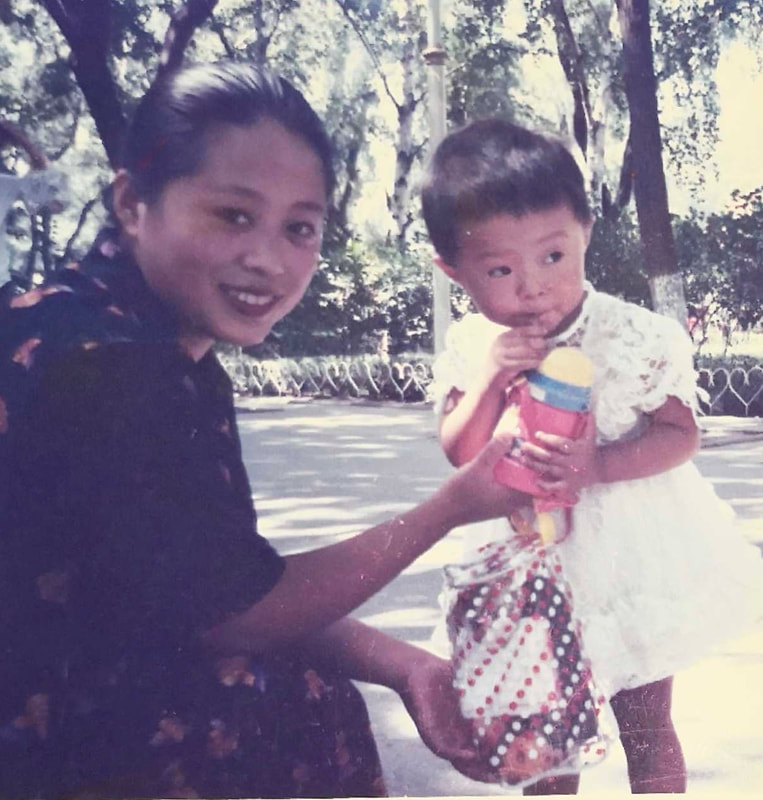
I just wonder how mothering me has influenced my mother's health.


​Family Inequalities and Children's Outcomes

  • Using 30 years of sibling data from the National Longitudinal Survey of Youth 1979 Children and Young Adults (NLSY79-CYA), my co-author and I investigate how exhibiting insecure temperaments at an early age is associated with various outcomes from adolescence to young adulthood. We pay special attention to whether the associations between insecure temperaments and youth outcomes depend on the mother’s age at the focal child’s birth. Using family fixed-effects models, we find that while young maternal age at birth is associated with worse educational achievement and mental health in adolescence and early adulthood for children with insecure childhood temperaments, it hardly matters for those with secure temperaments. Our findings enrich debates that view early childbearing’s impacts on offspring as universally negative or totally exaggerated. 
    • ​​​Yu, Wei-hsin, and Hope Xu Yan. 2022. “Maternal Age, Early Childhood Temperament, and Youth Outcomes.” Demography. 59(6):2215-2246
  • Using the same data, we also refute previous arguments that sibship size’s effect on children’s development is merely spurious. We argue that sibling additions mainly dilute first- and second-born children’s resources for intellectual and behavioral development. Further, having an older sibling is beneficial for behavioral development likely because older siblings serve as role models. 
    • ​Yu, Wei-hsin, and Hope Xu Yan. 2023. "Effects of Siblings on Cognitive and Sociobehavioral Development: Ongoing Debates and New Theoretical Insights." American Sociological Review. 88(6): 1002-1030.​
  • I am part of a project that studies how coresiding with grandparents is associated with children's health and cognitive outcomes in India using the India Human Development Survey (IHDS).


Time Use and Health

Picture
  • Using data from the 2003–2023 American Time Use Survey, My co-author and I examine trends in total housework (including core and occasional housework), shopping, and childcare time. We find that the historically large gender gap in total housework time narrowed further this century. This shrinking of the gender gap was concentrated in traditionally feminine core housework, particularly housecleaning and laundry. Decomposition analyses indicate that women’s reduced housework time was explained mainly by population compositional shifts, whereas men’s increased core housework time likely reflected behavioral or normative changes. With men taking on more female-typed domestic activities, the gendered norms associated with different forms of unpaid labor may be becoming redefined.
    • Milkie, Melissa A., Liana C. Sayer, Kei Nomaguchi, and Hope Xu Yan. 2025. Who’s Doing the Housework and Childcare in America Now? Differential Convergence in 21st-century Gender Gaps in Home Tasks. Socius: Sociological Research for a Dynamic World. 11:1-29. ​
  • Using time-diary data from the ASCC study, my co-authors and I find that compared to working from home, working at workplaces is more detrimental to LGBTQ workers’ stress and tiredness compared with non-LGBTQ workers. This difference can in part be explained by in-person LGBTQ workers’ longer work hours and greater co-worker interaction exhaustion, but not disparities in living arrangements. Our results point to the complexity of LGBTQ workers’ exposure to minority stress in different work settings and underscore the need for considering sexual and gender identities when evaluating the link between work location and well-being. 
    • Amerikaner, Layne*, Hope Xu Yan*, Liana C. Sayer, Long Doan, Jessica N. Fish, Kelsey J. Drotning, and R. Gordon Rinderknecht. 2023. “Blurred Borders or Safe Harbor? Emotional Well-being Among Sexual Minorities Working from Home During the COVID-19 Pandemic.” Social Science & Medicine. 323: 115850 (*equal co-first authors)


​Gender Inequalities and Women's Well-being in Asia

  • In my very first publication, my co-author and I use data from the China Family Panel Studies (CFPS) to study gender inequalities in children's healthcare utilization in rural China. Family fixed effects results indicate that rural households allocate more medical resources to boys than girls, suggesting the persistence of son preference. But girls’ disadvantages mainly exist in hospitalization rate (not in visiting hospitals) and are more prominent among girls older than six, likely because prenatal sex-selection has made female infanticide through ignoring young girls’ medical needs less common.  
    • Yan, Hope Xu, and Qiang Ren. 2019. “Selective Neglect: Gender Disparities in Children’s Healthcare Utilization in Rural China.” Chinese Journal of Sociology 5(3):283–311.
  • Using data from the IHDS, my co-authors and I explore gender asymmetry in how older Indians benefit from land ownership in rural multigenerational households. We find that household ownership of land is associated with higher decision-making power at home and survival only for older men. For older women, the link between household land ownership and decision-making power is positive when they have clear land titles or managerial control but negative when their names are not on land titles. This study fills the lack of research on the role of gender and generational hierarchies in shaping household assets’ impacts on older Indians’ autonomy, highlighting the importance of recognizing women’s control over household land and registering the land under women’s names. 
    • ​Yan, Hope Xu, Sonalde Desai, and Debasis Barik. 2023. "Gender and Generation: Landownership and Older Indians’ Autonomy." Feminist Economics. 30(1): 172-210. ​
Feminist Economics_Full Paper.pdf
File Size: 675 kb
File Type: pdf
Download File

  • Using data from the IHDS, we examine the relationship between mothers' empowerment and their adolescent children's (15-18) gender beliefs in India. Recognizing the multidimensionality of women's empowerment, we conduct latent class analysis to identify a six-class empowerment typology based on mothers' education, employment, decision-making power at home, mobility outside the home, and memberships in women’s organizations. Maternal empowerment’s association with egalitarian gender beliefs is salient among adolescent girls, but not boys. Adolescent girls with mothers labeled as proactive workers in our empowerment typology hold the most egalitarian gender beliefs, whereas low agency and underprivileged worker mothers’ daughters are the least egalitarian. 
    • Yan, Hope Xu, and Feinian Chen. 2025. "Adolescent Gender Beliefs in India: Does Mothers’ Empowerment Matter?" Social Science Research. 127: 103132. ​​​
SSR_Yan & Chen.pdf
File Size: 602 kb
File Type: pdf
Download File

Picture
Surrogacy ads outside a hospital in Beijing. "Sex selection, boy guaranteed."
  • Home
  • Research
  • Teaching
  • Data Management